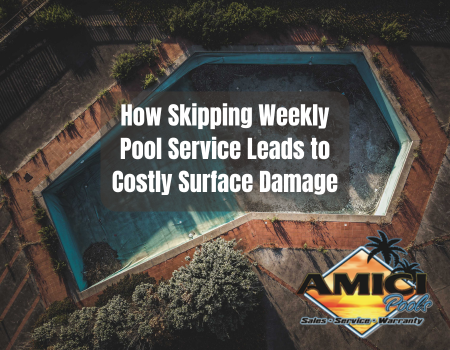
At first glance, skipping a week of pool service rarely feels like a big decision. The water still looks clear. The surface appears fine. Nothing seems urgent. In Arizona’s extreme climate, however, small lapses in routine maintenance can quietly trigger surface damage that becomes expensive and difficult to reverse.
Common Types of Surface Damage From Skipping Pool Service
 Pool surfaces are constantly interacting with water chemistry. When service is skipped, chemical levels can drift out of balance without obvious visual warning. pH and calcium hardness are especially sensitive. When water becomes too aggressive, it begins to pull minerals from plaster, pebble, or tile surfaces. This process, known as etching, happens gradually and often goes unnoticed until the surface damage is already permanent.
Etching leaves pool surfaces rough and uneven. What once felt smooth underfoot becomes abrasive, irritating swimmers and making surfaces more vulnerable to staining. Once the protective layer of the surface is compromised, dirt, metals, and organic debris adhere more easily. Regular brushing during weekly service normally prevents this buildup, but without it, stains begin to settle into etched areas, often the first sign of surface damage.
Staining is one of the most common consequences of missed service when it comes to surface damage. Metals from fill water, debris, and environmental contaminants can react with unbalanced chemistry and leave visible discoloration. These stains are not just cosmetic. Over time, they penetrate deeper into the surface material, making removal increasingly difficult. What might have been corrected with minor adjustments early on can later require aggressive treatments or resurfacing to fix the surface damage.
Arizona heat accelerates every stage of this process. High water temperatures speed up chemical reactions, meaning imbalance does more damage in less time. Intense sunlight further complicates matters by breaking down sanitizers and destabilizing chemistry. Without weekly monitoring and adjustments, water conditions can swing rapidly, increasing the risk of surface damage.
Skipping service also impacts circulation and debris management. Leaves, dust, and fine particles settle on pool floors and walls, creating localized chemical imbalances at the surface level. These areas become hotspots for etching and staining, especially along steps, benches, and shallow ends where water movement is often reduced.
The long-term repair costs associated with surface damage are significant. Etched surfaces cannot be smoothed without resurfacing. Deep stains may resist chemical removal entirely. In many cases, homeowners are left with the choice between living with visible damage or investing in costly surface restoration. These repairs far exceed the cost of consistent weekly service.
Routine pool service acts as preventative care. Regular testing, brushing, and minor chemical corrections protect surfaces before damage sets in. It is not about keeping the pool looking good today. It is about preserving the integrity of the surface for years to come.
In Arizona, pools endure constant stress from heat, sun, and heavy use. Weekly service is not a luxury or a convenience. It is a safeguard against damage that compounds quietly over time. Skipping service may save money in the short term, but it often leads to surface repairs that cost far more than routine maintenance ever would.