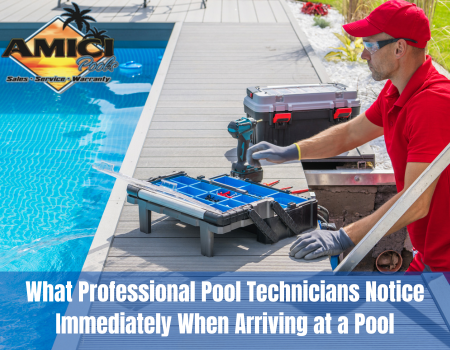
 A pool technician who’s been servicing Arizona pools for several seasons develops a specific read in the first thirty seconds of arriving at a property. The water color, the equipment sounds, the deck surface, the skimmer line — these communicate the pool’s condition before anyone opens a testing kit or touches a piece of equipment. Most of the diagnostic work happens before the formal work starts, and understanding what an experienced pool technician is reading during those first moments tells pool owners more about what good service looks like than any service checklist does.
What a Pool Technician Notices About Your Pool
Water
Water color and clarity communicate specific conditions from the deck before any testing happens. Clear water with a blue-green tint is the baseline. Cloudy with a white or grey cast means particulate matter in suspension — inadequate filtration, recent chemical imbalance, early algae, or calcium carbonate precipitation from high pH and hardness. Green is active algae growth past the early stage. A teal cloudiness that isn’t the normal pool color often means copper in the water from a degrading heat exchanger or algaecide application. Each of these is a different problem with a different response, and an experienced pool technician has already started narrowing the diagnosis before stepping off the deck.
The waterline tells a separate story. Calcium scale at the tile line, the white crusty deposit that builds in Arizona’s hard water environment, communicates how aggressively calcium has been precipitating and how consistently the waterline has been brushed. In Havasu or Phoenix, a pool running several years without scale management has a history that’s visible in the deposit. A pool technician who’s serviced the pool before knows whether a clean waterline means good chemistry management or just that it was cleaned at the last visit. Both look the same on the day. Only one reflects the actual maintenance history.
Equipment
Before touching anything, a pool technician listens. A pump running normally has a consistent sound that becomes familiar quickly. Grinding or growling from the motor end is bearing noise, and a bearing that’s started making noise is a bearing that’s working toward failure. High-pitched at startup and then quiet is often a sign that a capacitor is beginning to go. Rattling that changes when the basket is cleared is usually debris in the impeller rather than a mechanical problem. Bearing noise doesn’t change with basket clearing. It stays.
The pressure gauge on the filter gets read against the baseline for that specific system, not against a universal standard. Eight to ten PSI above normal means the filter needs service. Unexpectedly low pressure when the filter hasn’t been cleaned in a documented period sometimes means a broken lateral or a cracked cartridge, allowing water to bypass the media entirely. High pressure means restriction. Pressure that’s lower than it should be means something is wrong with the filtration rather than working correctly. Both are problems. They look like opposite problems, and they are.
Chemistry Before the Test Kit
Slippery surfaces on the steps and walls indicate biofilm from inadequate sanitizer or poor circulation. The chloramine smell most people associate with a heavily chlorinated pool is actually a chemistry problem — combined chlorine from bather waste and not enough free chlorine to oxidize it. A pool that smells strongly of chlorine is under-sanitized, not over-sanitized. An algae smell before any green is visible means early establishment that needs to be addressed before it becomes visible and considerably more expensive to treat.
The test kit confirms what the visual and sensory read already suggested. A pool technician who tests first and then looks has the sequence inverted. The numbers make more sense in the context of what the water looks like, what the equipment is doing, and what the weather and use history suggest about what the chemistry has been through since the last visit.
The Deck and Equipment Pad
Organic debris accumulated in corners and along the waterline tells the pool technician how recently the pool was actually serviced and how much organic load is entering the water. A deck with leaves breaking down in the corners and debris sitting against the equipment pad suggests a service interval longer than the pool’s current condition warrants.
The equipment pad specifically holds information that persists even after visible symptoms are temporarily addressed. Oil stains around fittings mean slow leaks that have been weeping long enough to leave deposits on the concrete. Mineral deposits around pipe connections mean water escaping under pressure and evaporating at the surface. Green growth on the pad surface means moisture that shouldn’t be there. A pool technician examining the equipment pad before opening anything is reading the plumbing and equipment service history in a way that doesn’t require documentation to be present.
What This Means
A pool technician who reads the pool on arrival catches the early bearing noise before it becomes a failure, the early algae before it becomes green water, the filter pressure before it affects water quality, and the waterline scale before it bonds permanently. A pool technician who arrives, adds chemicals, and leaves without doing any of this is completing tasks rather than providing pool care.
In Arizona’s operating environment, the difference between the two accumulates across a season in equipment lifespan and water quality rather than showing up all at once. Pool owners who understand what the diagnostic pattern looks like can evaluate whether the service they’re receiving reflects genuine expertise or routine task completion.
The CDC’s pool operator resources cover the inspection standards and diagnostic approaches that trained pool professionals follow, what chemical testing protocols apply to professional pool service, and what the difference between task completion and genuine pool care looks like from a public health and water safety perspective — an authoritative context that supports the article’s core argument about what professional pool service actually involves.